
How to Prevent Clogged Drains: Tips for Orange County Homeowners
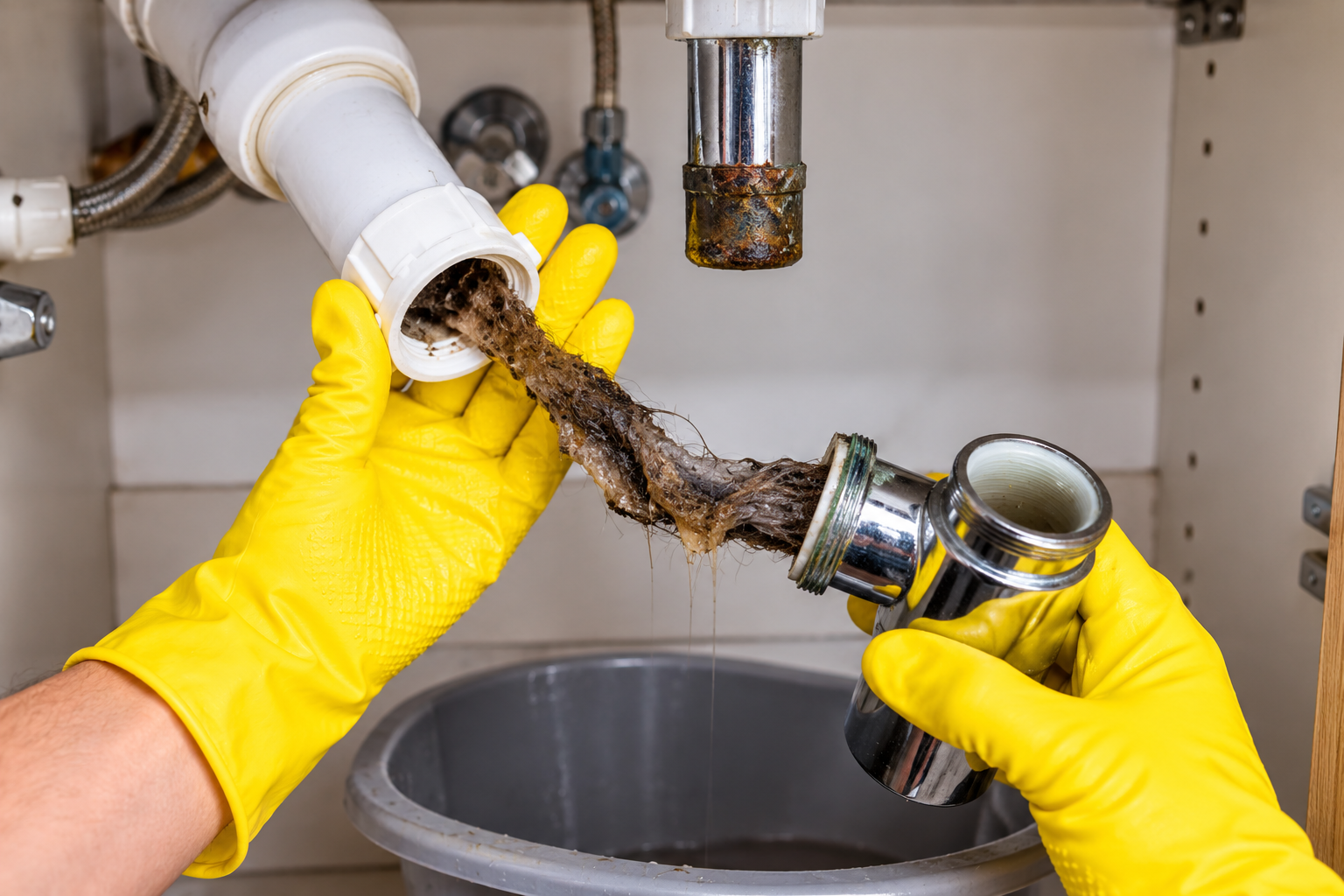
Clogged drains are one of the most common plumbing problems homeowners deal with. A drain may start running a little slower than usual, but over time, buildup inside the pipe can turn a minor inconvenience into a stubborn clog, backup, or larger plumbing problem.
The good news is that many drain clogs can be prevented with a few simple habits. Knowing what should—and shouldn't—go down your drains can help protect your plumbing system and reduce the chances of an unexpected backup.
Keep Grease and Oil Out of Kitchen Drains
Cooking grease, fats, and oils are some of the biggest contributors to kitchen drain problems.
Although grease may be liquid when it's hot, it can cool and solidify inside your pipes. Over time, grease can combine with food particles and other debris, creating buildup that restricts water flow and eventually causes a blockage.
Instead of pouring grease down the sink, allow it to cool and dispose of it properly in the trash.
Using a sink strainer is another simple way to keep food scraps and debris from entering your drain.
Be Careful What Goes Down the Garbage Disposal
A garbage disposal is convenient, but it isn't designed to handle everything.
Avoid putting large amounts of food scraps, grease, coffee grounds, fibrous foods, and other difficult-to-break-down materials into the disposal. Even when the disposal appears to grind the material successfully, some debris can remain in the drain line and contribute to buildup.
Run water while operating your garbage disposal and give the water a little time to continue flowing afterward to help move waste through the drain line.
Protect Shower and Bathtub Drains From Hair
Hair and soap residue are common causes of slow bathroom drains.
As hair travels down the drain, it can collect inside the pipe and combine with soap residue and other debris. Eventually, water may begin draining slowly or stop flowing properly altogether.
An inexpensive hair catcher or drain screen can prevent a significant amount of hair from entering your plumbing system. Clean it regularly to keep water flowing freely.
Don't Treat Your Toilet Like a Trash Can
Toilets are designed primarily to handle human waste and toilet paper.
Items such as wipes, paper towels, feminine hygiene products, cotton swabs, and other household products can contribute to serious drain and sewer blockages.
Even products marketed as “flushable” may not break down as quickly as toilet paper. Keeping these materials out of your toilet is one of the simplest ways to help prevent avoidable plumbing problems.
Pay Attention to Slow Drains
A slow drain is often an early warning sign.
If water begins taking longer to disappear from a sink, shower, or bathtub, there may already be buildup inside the drain line. Addressing the problem early can be easier than waiting until the pipe becomes completely blocked.
Other warning signs can include:
Gurgling or unusual sounds from drains
Water backing up into a sink, shower, or bathtub
Recurring clogs
Unpleasant odors coming from drains
Multiple fixtures draining slowly at the same time
If several drains in your home are experiencing problems simultaneously, the issue may be farther down the plumbing or sewer system rather than limited to a single fixture.
Be Careful With Chemical Drain Cleaners
When a drain becomes clogged, reaching for a bottle of chemical drain cleaner may seem like an easy solution.
However, chemical products aren't appropriate for every plumbing system or every type of blockage. They may also fail to address the actual cause of a recurring drain problem.
If a clog continues returning or the drain will not clear properly, professional drain cleaning can help identify and address the underlying problem instead of repeatedly treating the symptom.
When Should You Call a Plumber for a Clogged Drain?
An occasional minor clog may be simple to resolve, but recurring or severe drain problems deserve more attention.
Consider calling a professional plumber when a drain repeatedly clogs, several drains are slow at the same time, wastewater backs up into fixtures, you hear persistent gurgling sounds, or normal attempts to clear the drain aren't working.
Depending on the situation, a plumber can determine whether the problem is a localized clog or an issue farther into the drain or sewer line.
Professional Drain Cleaning in Orange County
If you're dealing with a slow drain, stubborn clog, recurring backup, or another drainage problem, FH Plumbing Inc. provides professional drain cleaning and clog removal services throughout Orange County.
Our goal is to identify the source of the problem and provide the appropriate solution to restore proper flow while protecting your plumbing system.
Don't wait for a slow drain to become a complete blockage.
